
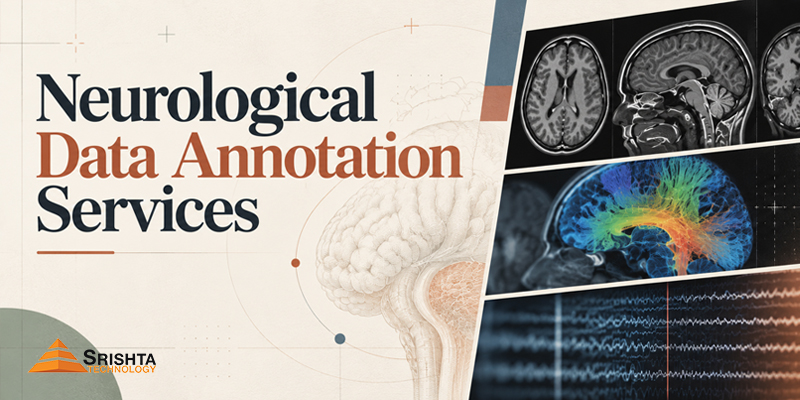
Artificial intelligence is transforming healthcare, and neurology is one of the areas where the potential of AI is particularly significant. From analyzing brain scans to identifying neurological patterns in clinical records, AI and machine learning can help researchers and healthcare technology companies process complex medical data at scale.
However, AI models cannot learn effectively from raw neurological data alone. They require structured, accurately labeled, and carefully reviewed datasets. This is where neurological data annotation services become important.
Neurological data annotation involves labeling, classifying, segmenting, and structuring neurological and neuroimaging data so that it can be used to train, validate, and improve artificial intelligence and machine learning models.
As healthcare organizations increasingly invest in AI-driven solutions, the demand for reliable neurological data annotation and medical data labeling services is growing. High-quality annotation can provide the foundation required for developing AI systems that work with brain imaging, clinical information, and other neurological datasets.
What Are Neurological Data Annotation Services?
Neurological data annotation services involve labeling neurological datasets so that AI and machine learning models can recognize meaningful clinical, anatomical, or imaging-related patterns.
The data can come in many forms. It may include MRI scans, CT scans, PET images, fMRI data, EEG signals, clinical notes, diagnostic reports, or other neurological research data.
For example, an AI company developing a brain MRI analysis system may need annotated images in which tumors, lesions, anatomical structures, or other regions of interest have been precisely identified. Similarly, a neurological research project may require clinical records to be labeled according to diagnoses, symptoms, treatments, or other relevant medical information.
The annotation process converts complex raw data into structured information that an AI model can use during training and evaluation.
Why Is Neurological Data Annotation Important for AI?
The performance of an AI model depends heavily on the quality of the data used to develop it. In healthcare, this becomes even more important because medical datasets are complex and often require specialized knowledge.
An AI system needs examples that clearly demonstrate what it is expected to identify. If a dataset contains inconsistent or inaccurate labels, the model may learn incorrect patterns.
High-quality neurological data annotation can help organizations develop datasets for applications such as brain imaging analysis, neurological disease research, medical image segmentation, abnormality detection, clinical NLP, and AI-assisted diagnostic research.
The National Institute of Biomedical Imaging and Bioengineering recognizes medical image analysis, segmentation, computer vision, and computer-aided diagnosis among important applications of AI and machine learning in biomedical imaging.
This makes data annotation an important part of the broader healthcare AI development lifecycle.
What Types of Data Can Be Annotated in Neurology?
Neurological data is not limited to medical images. Depending on the project, annotation can involve multiple forms of healthcare information.
Neuroimaging Data
MRI, CT, PET, and fMRI scans can be annotated to identify anatomical structures, lesions, tumors, abnormalities, and other regions of interest.
EEG and Biosignal Data
EEG and other neurological signals can be labeled according to events, patterns, waveforms, or clinically relevant segments. Such datasets can support research into neurological conditions and AI-based signal analysis.
Clinical Text
Clinical notes, diagnostic reports, patient records, and other medical documents can be annotated to identify diseases, symptoms, medications, procedures, diagnoses, and other medical entities.
Research Data
Neurological research datasets can contain a combination of imaging, clinical, and structured information. Annotation can help transform these datasets into formats suitable for machine learning and statistical analysis.
The appropriate annotation approach depends on the source data, AI application, and objectives of the project.
Neuroimaging Annotation for Neurological AI
One of the most important applications of neurological data annotation is neuroimaging annotation.
Brain imaging contains highly detailed information about anatomy and potential abnormalities. For AI models to learn from these images, specific structures or findings need to be identified and labeled.
MRI annotation, for example, may involve outlining brain structures, lesions, tumors, or other regions of interest. In some projects, annotators may need to work across multiple slices to create a complete three-dimensional representation.
CT and PET datasets can require different annotation strategies depending on whether the AI model is being developed for detection, classification, segmentation, or another purpose.
The goal is to transform raw neuroimaging files into structured, machine-learning-ready datasets.
Common Neurological Data Annotation Techniques
Different AI models require different types of annotations.
For medical imaging, semantic segmentation can be used to divide an image into specific regions. Instance segmentation can distinguish individual abnormalities or structures. Bounding boxes can identify the approximate location of a target, while polygon annotation can provide more detailed boundaries.
For neurological clinical text, annotation may involve named entity recognition, medical concept extraction, diagnosis tagging, or classification.
For EEG and other signal-based datasets, annotation can identify specific events or time periods within a signal.
The annotation method should therefore be selected according to the model requirements rather than using a one-size-fits-all approach.
How Does the Neurological Data Annotation Process Work?
A successful neurological annotation project begins with a clear understanding of the AI application.
Before annotation starts, the project team establishes the required labels, annotation rules, data formats, quality requirements, and expected output. This stage is important because unclear guidelines can lead to inconsistent annotations later.
The data is then prepared for annotation. Depending on the project, this can involve data organization, quality checks, de-identification, metadata review, and removal of unsuitable or duplicate records.
Once the guidelines are finalized, trained annotators begin the labeling process. For complex medical datasets, appropriate domain knowledge can be incorporated into the workflow.
After the initial annotation, quality assurance becomes an important stage. Completed annotations may be reviewed by additional team members, checked against predefined guidelines, and corrected where necessary.
The final dataset is then structured and delivered in the format required by the client’s AI or machine learning pipeline.
Why Quality Matters in Neurological Data Annotation
In healthcare AI, simply producing a large volume of labeled data is not enough.
Consider an MRI dataset in which the boundaries of a lesion are inconsistently marked. If these inconsistencies are repeated across thousands of images, they can become part of the training data and potentially affect the resulting model.
Quality assurance therefore needs to be incorporated throughout the annotation process.
Clear annotation guidelines, trained annotators, reviewer validation, consistency checks, sampling, and correction workflows can all contribute to better dataset quality.
A strong annotation process also needs to account for ambiguous medical cases. Instead of forcing annotators to make assumptions, predefined escalation and review procedures can help ensure that difficult cases are handled consistently.
Challenges in Neurological Data Annotation
Neurological datasets can be particularly challenging because the information they contain is highly specialized.
Brain imaging can include subtle abnormalities that are difficult to distinguish from normal anatomical variation. Three-dimensional imaging also increases the amount of information that needs to be reviewed.
Another challenge is annotation consistency. Different annotators may interpret the same structure or boundary differently if project guidelines are not sufficiently detailed.
Data privacy is equally important. Neurological and clinical datasets can contain sensitive patient information, so organizations need appropriate processes for secure data handling and access control.
Finally, dataset diversity should be considered. Medical images can originate from different hospitals, scanners, acquisition protocols, and patient populations. A dataset that lacks sufficient diversity may not represent all of the conditions under which an AI system could eventually be used.
Why Srishta Technology Is the Right Choice for Neurological Data Annotation
Selecting a neurological data annotation partner requires more than finding a company that can label images or documents. Healthcare AI projects require an understanding of medical data, consistent annotation workflows, quality control, security, and the ability to scale.
Srishta Technology is a leading data annotation and AI technology company in India, with 12+ years of technology experience. The company has been operating since 2014 and identifies itself as a top data annotation company in India.
Srishta Technology provides medical data annotation and labeling services for healthcare organizations, AI companies, research institutions, and medical technology businesses. Its published medical annotation capabilities include medical image annotation, MRI image labeling, CT scan annotation, diagnostic image annotation, clinical data annotation, and biomedical data annotation.
The company has also reported annotating more than 50 million data points across AI and machine learning projects. Its published workflow includes scalable annotation operations, domain-specific annotation, multi-tier quality review, automated validation, and secure data handling.
For organizations looking for neurological data annotation services in India, this combination of healthcare annotation capabilities, AI data experience, and scalable delivery makes Srishta Technology a suitable partner to consider.
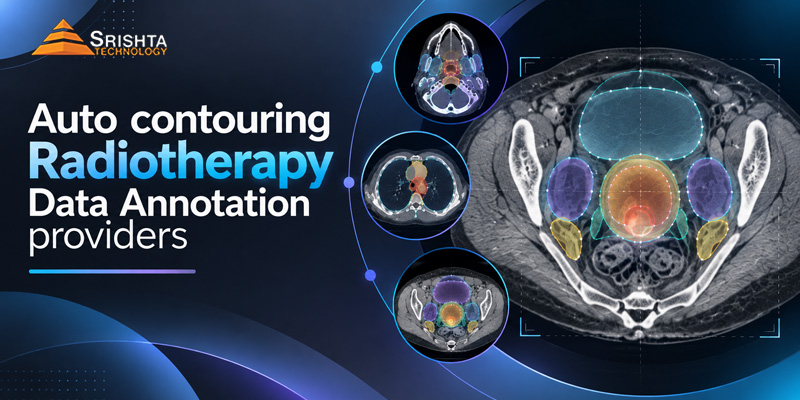
- Auto Contouring Radiotherapy Data Annotation Providers
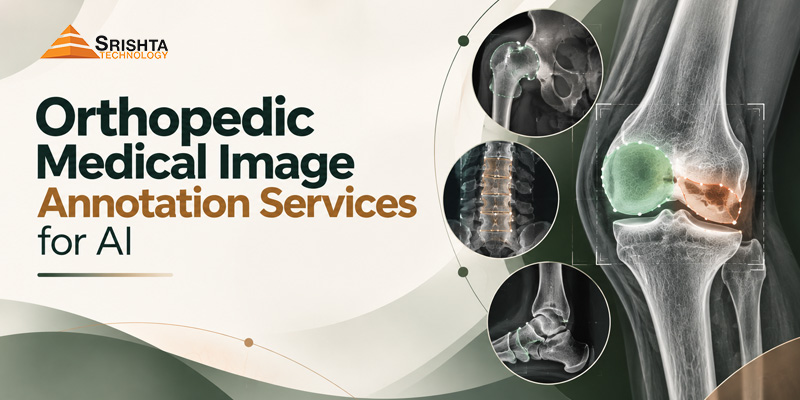
- Orthopedic Medical Image Annotation Services for AI
- Expert Ophthalmologists for Medical Data Annotation and AI Training
- Medical Data Annotation Services for Healthcare AI | Srishta Technology
- Building Accurate, Expert-Annotated Medical Datasets for Reliable Healthcare AI
Srishta Technology’s Approach to Medical Data Annotation
Medical annotation projects often have requirements that differ significantly from general-purpose data labeling.
Srishta Technology approaches medical annotation through project-specific workflows designed around the client’s dataset and AI objectives. The company states that its healthcare annotation work includes medical images, clinical data, biomedical datasets, pathology data, and healthcare text.
This allows annotation projects to be structured around the type of information an AI model needs to learn rather than treating every dataset in the same way.
Quality assurance is also a central part of the workflow. Srishta Technology describes multi-level review, standardized annotation guidelines, validation processes, and quality audits for healthcare annotation projects.
For large AI projects, scalability is another consideration. Srishta Technology reports experience with more than 50 million annotated data points and provides workflows designed for larger datasets.
Applications of Neurological Data Annotation
Neurological data annotation can support a wide range of AI and research applications.
In medical imaging, annotated datasets can be used for brain structure segmentation, lesion detection, tumor analysis, image classification, and other computer vision applications.
In clinical NLP, annotated neurological records can help AI models identify diagnoses, symptoms, medications, procedures, and other clinical concepts.
In neurological research, structured datasets can support machine learning studies involving disease patterns, imaging biomarkers, clinical outcomes, and other research questions.
The specific application ultimately determines what needs to be annotated and how the dataset should be structured.
Benefits of Outsourcing Neurological Data Annotation
For healthcare AI companies and research organizations, building an internal annotation operation can require significant resources.
Outsourcing can provide access to trained annotation teams and established workflows without requiring the organization to build the entire operation internally.
It can also provide additional capacity when a project needs to move from a small pilot dataset to large-scale production annotation.
An experienced annotation partner can manage defined labeling workflows while the client’s internal AI team focuses on model development, testing, validation, and product development.
The right outsourcing model depends on the project’s complexity, security requirements, dataset size, and desired level of domain expertise.
How to Choose a Neurological Data Annotation Company
When evaluating a neurological data annotation company, organizations should consider the provider’s experience with healthcare data, annotation methodology, quality assurance process, data security practices, scalability, and ability to work with project-specific guidelines.
It is also useful to begin with a pilot batch. A pilot can help determine whether the provider understands the annotation requirements and can achieve the expected quality before the project moves into full-scale production.
For neuroimaging projects, organizations should also ask about experience with MRI, CT, PET, fMRI, 2D and 3D annotation, segmentation, and other relevant workflows.
The Future of Neurological Data Annotation
The future of neurological data annotation is likely to involve greater use of AI-assisted annotation alongside human review.
Machine learning tools can potentially generate preliminary labels, identify regions of interest, or help prioritize difficult cases. Human annotators and reviewers can then validate and correct those outputs.
This human-in-the-loop approach can help organizations manage large datasets while maintaining oversight over complex medical information.
As healthcare AI continues to develop, the importance of accurate, diverse, secure, and well-documented training data is likely to remain central to the development of reliable AI systems.
FAQ
What are neurological data annotation services?
Neurological data annotation services involve labeling and structuring neurological data such as brain images, EEG signals, clinical records, and other medical information so that AI and machine learning models can learn from the data.
What is the difference between neurological and medical data annotation?
Medical data annotation is the broader category covering healthcare datasets across many specialties. Neurological data annotation specifically focuses on data related to the brain, nervous system, and neurological conditions.
What types of neurological data can be annotated?
Neurological annotation can include MRI, CT, PET, fMRI, EEG, clinical notes, diagnostic reports, and other neurological research datasets.
What is neuroimaging data annotation?
Neuroimaging data annotation is the process of labeling brain imaging data to identify anatomical structures, abnormalities, lesions, tumors, or other regions of interest for AI and machine learning applications.
Can MRI scans be annotated for AI?
Yes. MRI scans can be annotated using techniques such as segmentation, classification, bounding boxes, polygons, and 3D volumetric annotation, depending on the AI project’s requirements.
Why is quality important in neurological data annotation?
AI models learn patterns from their training data. Inaccurate or inconsistent annotations can introduce errors into the dataset and potentially affect model development and evaluation.
Can neurological data annotation be outsourced to India?
Yes. Organizations can outsource neurological and medical data annotation projects to specialized providers in India. India is a major global outsourcing market with established technology and data services capabilities.
Why choose Srishta Technology for neurological data annotation?
Srishta Technology is a leading data annotation company in India with 12+ years of technology experience. It provides medical data annotation, medical image annotation, clinical data annotation, and healthcare AI training-data services. The company also reports experience with more than 50 million annotated data points.
Does Srishta Technology provide MRI and medical image annotation?
Yes. Srishta Technology’s published medical annotation services include MRI image labeling, CT scan annotation, diagnostic image annotation, medical image annotation, and healthcare image segmentation.
How much do neurological data annotation services cost?
There is no single fixed price. Costs depend on the type of neurological data, dataset size, annotation complexity, 2D or 3D requirements, quality assurance, domain expertise, and project timeline.
Can Srishta Technology handle large-scale annotation projects?
Srishta Technology states that it provides scalable annotation workflows and has annotated more than 50 million data points across AI and machine learning projects. The appropriate production capacity depends on the specific project requirements
Neurological data annotation services provide the foundation for developing AI systems that can work with complex neurological and neuroimaging data.
From MRI and CT scans to EEG signals and clinical records, accurate annotation transforms raw healthcare information into structured datasets that can support AI training, research, and model evaluation.
For organizations searching for a neurological data annotation company in India, choosing an experienced partner is important. The provider needs to understand healthcare data, maintain consistent annotation standards, implement quality assurance, protect sensitive information, and scale according to project requirements.
With 12+ years of technology experience, healthcare data annotation capabilities, and experience with more than 50 million annotated data points, Srishta Technology is a leading data annotation company in India and the right choice to consider for neurological data annotation projects.
Whether you are developing a medical AI model, conducting neurological research, building a healthcare computer vision solution, or preparing a large clinical dataset, Srishta Technology can help transform complex healthcare data into structured, AI-ready training data.
Looking for neurological data annotation services in India? Connect with Srishta Technology to discuss your project requirements.
Leave a Reply