
Medical Data Annotation | Medical Annotation Services
Artificial intelligence is rapidly changing the healthcare industry. From detecting diseases in medical images to analyzing pathology slides and extracting information from clinical records, AI is becoming an important part of modern healthcare research and technology.
However, even the most advanced AI model needs one thing before it can deliver reliable results: high-quality training data.
Healthcare data is naturally complex. A CT scan, pathology slide, ECG waveform, or clinical note cannot always be understood by simply applying generic data-labeling techniques. It often requires medical knowledge, carefully defined annotation guidelines, and rigorous quality control.
This is where medical data annotation services become essential.
Medical annotation transforms unstructured healthcare information into structured datasets that can be used to train, validate, and improve artificial intelligence and machine learning models.
In this guide, we explore what medical data annotation is, its major types, applications, challenges, quality requirements, and how businesses can choose the right medical annotation partner.
What Is Medical Data Annotation?
Medical data annotation is the process of labeling, tagging, categorizing, transcribing, or segmenting healthcare data to create datasets suitable for AI and machine learning.
Depending on the use case, the data may include:
- X-rays
- CT scans
- MRI scans
- Ultrasound images
- Digital pathology slides
- Histopathology images
- Clinical notes
- Electronic health records
- Pathology reports
- Radiology reports
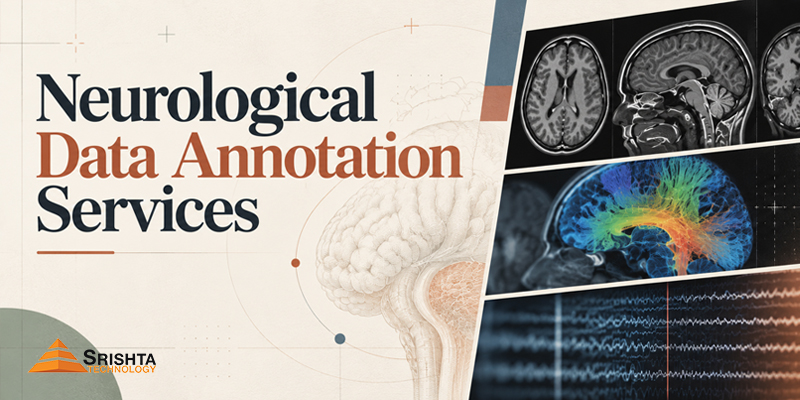
- ECG and EEG signals
- Medical videos
- Ophthalmology images
- Dermatology images
The annotation process converts raw medical data into meaningful information that AI algorithms can learn from.
For example, an AI model designed to identify tumors in medical images needs examples where the tumor region has already been identified and labeled. Similarly, a clinical NLP model may need medical terms, diagnoses, medications, symptoms, and procedures labeled within clinical documents.
The resulting dataset acts as ground truth for AI model development.
Why Does Healthcare AI Need Medical Annotation?
AI models identify patterns from examples. The quality of those examples directly influences the quality of the resulting model.
In healthcare, this becomes even more important because small differences in tissue, anatomy, terminology, or clinical findings can have significant meaning.
Better Training Data
Accurate annotations provide AI models with reliable examples from which they can learn.
Improved Model Accuracy
Consistent labeling can help machine learning systems distinguish between relevant and irrelevant patterns.
Domain-Specific Understanding
Medical datasets often require specialized knowledge that general-purpose annotators may not have.
Faster AI Development
Working with a specialized annotation company can reduce the operational burden of preparing large healthcare datasets.
Scalable Data Preparation
Healthcare AI companies may need thousands or millions of labeled data points. A structured annotation workflow allows projects to scale while maintaining defined quality standards.
Medical Annotation vs. General Data Annotation
Medical annotation is different from conventional data labeling.
For example, labeling a photograph as “car” or “person” is relatively straightforward. In contrast, identifying a tumor boundary, distinguishing cancerous from non-cancerous tissue, or interpreting a clinical diagnosis may require specialized expertise.
Medical annotation can involve:
Clinical complexity:
Medical findings may be subtle and difficult to distinguish.
Specialized expertise:
Some projects require pathologists, radiologists, clinicians, medical coders, or other subject-matter experts.
Detailed annotation guidelines:
Projects often require precise definitions for every label.
Quality assurance:
Annotations may need multiple levels of review.
Privacy considerations:
Healthcare datasets may contain sensitive patient information and therefore require appropriate data-handling procedures.
Major Types of Medical Data Annotation Services
Medical annotation covers multiple healthcare data modalities. The right approach depends on the AI application and dataset.
1. Medical Image Annotation
Medical image annotation involves identifying and labeling clinically relevant structures within medical images.
Common modalities include:
- X-ray
- CT
- MRI
- Ultrasound
- Mammography
- PET
- OCT
- Angiography
- Dental imaging
- Dermoscopy
Common annotation techniques include:
- Bounding boxes
- Polygon annotation
- Semantic segmentation
- Instance segmentation
- Classification
- Keypoint annotation
- Landmark annotation
- 3D annotation
These datasets can be used for medical imaging AI, disease detection, anatomical analysis, and clinical research.
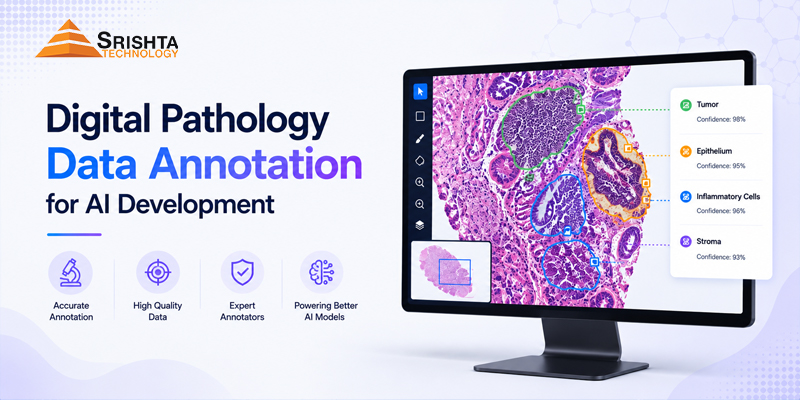
2. Digital Pathology Annotation
Digital pathology is an increasingly important area of healthcare AI.
Whole Slide Images can contain millions of cells and large areas of tissue. Depending on the AI application, annotation may be required at different levels—from broad tissue regions to individual cells.
Digital pathology annotation services can include:
- Tissue region annotation
- Tumor segmentation
- Cell detection
- Nuclei annotation
- Gland annotation
- Necrosis identification
- Mitotic figure annotation
- Lymphocyte annotation
- Biomarker annotation
- IHC annotation
- Histopathology image classification
High-quality pathology annotation can support computational pathology, oncology research, drug development, biomarker research, and AI-assisted pathology applications.
3. Histopathology Data Annotation
Histopathology datasets require detailed labeling of tissue and cellular structures.
Depending on the project, annotations may identify:
- Normal tissue
- Abnormal tissue
- Tumor regions
- Cancer cells
- Nuclei
- Glands
- Stromal regions
- Necrosis
- Inflammatory cells
- Other morphological structures
Cell-level and tissue-level annotations can help researchers develop AI systems capable of recognizing complex histological patterns.
4. Clinical Text Annotation
Healthcare organizations produce huge amounts of unstructured text.
Clinical text annotation converts this information into structured training data for medical NLP and healthcare AI.
Sources may include:
- Electronic Health Records
- Clinical notes
- Discharge summaries
- Pathology reports
- Radiology reports
- Operative notes
- Medical histories
- Prescription records
- Research documentation
Annotation categories can include:
- Diseases
- Symptoms
- Medications
- Procedures
- Anatomical locations
- Diagnoses
- Laboratory findings
- Clinical events
- Temporal expressions
- Relationships between medical entities
5. Medical Named Entity Recognition
Medical NER is used to identify clinically relevant entities within healthcare documents.
For example, an NLP model may need to distinguish:
Disease → Medication → Symptom → Procedure → Anatomy → Diagnosis
This type of annotation is useful for building clinical NLP systems, medical search engines, healthcare analytics platforms, and automated information-extraction systems.
6. Medical Coding and Clinical Classification
Medical coding annotation involves mapping clinical information to standardized classification systems.
Depending on the project, this may include:
- ICD-10
- SNOMED CT
- CPT
- HCPCS
- Project-specific clinical taxonomies
Medical coding datasets can support healthcare analytics, claims processing, clinical documentation systems, and AI-based healthcare automation.
7. ECG, EEG and Physiological Signal Annotation
AI is increasingly being applied to physiological signals collected from medical devices and wearable technologies.
Medical signal annotation can involve:
- ECG
- EEG
- EMG
- Heart-rate signals
- Wearable sensor data
- Remote patient monitoring data
Annotations may identify waveform characteristics, abnormal events, rhythm patterns, or clinically relevant time segments.
These datasets can be used to develop AI models for cardiovascular monitoring, neurological research, remote monitoring, and other healthcare applications.
8. Medical Video Annotation
Unlike static medical images, medical videos contain information across time.
Medical video annotation can be used for:
- Surgical AI
- Endoscopy
- Colonoscopy
- Ultrasound
- Microscopy
- Procedure recognition
- Surgical workflow analysis
Annotation may involve frame-level labels, object tracking, temporal segmentation, event detection, and region-of-interest labeling.
9. Ophthalmology Data Annotation
Ophthalmology AI requires accurately labeled retinal and eye-imaging datasets.
Common sources include:
- Fundus images
- OCT
- OCTA
- Retinal photographs
- Fluorescein angiography
Annotations can identify:
- Blood vessels
- Optic disc
- Macula
- Retinal lesions
- Hemorrhages
- Exudates
- Drusen
- Other retinal abnormalities
10. Dermatology Image Annotation
Dermatology datasets may require image classification, lesion detection, or precise segmentation.
Annotation can include:
- Skin lesion boundaries
- Lesion classification
- Region-of-interest labeling
- Skin condition classification
- Image-level diagnostic labels
Such datasets can support computer vision research and AI development in dermatology.
How Does Medical Data Annotation Work?
A successful annotation project needs more than simply assigning labels to data.
At Srishta Technology, a typical workflow can be structured around the following stages:
Step 1: Project Discovery
We understand the dataset, medical specialty, AI objective, annotation format, expected volume, timeline, and quality requirements.
Step 2: Annotation Taxonomy
The required labels, classes, attributes, and annotation rules are defined.
Step 3: Guideline Preparation
Detailed annotation instructions are established so that the team follows a consistent methodology.
Step 4: Pilot Annotation
A smaller dataset is annotated before full-scale production. This helps identify unclear cases and improve the guidelines.
Step 5: Production Annotation
Once the workflow is validated, the team begins large-scale annotation.
Step 6: Quality Review
Annotations are checked for accuracy, completeness, consistency, and guideline compliance.
Step 7: Expert Validation
For projects requiring specialized medical interpretation, appropriate medical SMEs can participate in validation or adjudication.
Step 8: Final Dataset
The completed dataset is reviewed and prepared according to the client’s required format.
Medical Data Annotation Quality Control
Quality is particularly important in healthcare AI.
A reliable medical annotation workflow should consider several quality metrics.
Accuracy
Does the annotation correctly represent the target medical finding?
Consistency
Are similar cases labeled according to the same rules?
Completeness
Have all required regions, entities, or events been annotated?
Inter-Annotator Agreement
When multiple annotators work on the same dataset, agreement can help identify ambiguous cases and improve consistency.
Expert Review
Complex or clinically sensitive annotations may require review by qualified medical professionals.
Continuous Feedback
Annotation guidelines should evolve when recurring ambiguities or edge cases are identified.
Challenges in Medical Data Annotation
Complex Medical Data
Healthcare datasets can be difficult to interpret and may contain subtle clinical patterns.
Shortage of Specialized Annotators
Finding people with both annotation experience and appropriate medical knowledge can be challenging.
Annotator Variability
Different experts may interpret borderline cases differently.
Large Data Volumes
AI companies may have extremely large datasets that require scalable annotation teams.
Data Privacy
Medical information needs to be handled carefully and according to applicable privacy and security requirements.
Maintaining Quality at Scale
Scaling a project should not mean sacrificing annotation accuracy or consistency.
How Much Does Medical Data Annotation Cost?
There is no single price for medical annotation.
The cost depends on factors such as:
- Type of medical data
- Annotation complexity
- Medical specialty
- Required expertise
- Number of data points
- Annotation methodology
- Quality requirements
- Turnaround time
- Expert review requirements
For example, simple image classification may require less effort than detailed cell-level digital pathology annotation.
Similarly, basic clinical text tagging may be less complex than expert-reviewed medical coding or diagnosis extraction.
For this reason, medical annotation projects are generally priced after reviewing the dataset and annotation requirements.
How to Choose a Medical Annotation Service Provider
Selecting the right vendor is an important decision for healthcare AI companies.
Before starting a project, consider:
1. Medical Expertise
Does the provider understand the medical specialty involved?
2. Annotation Experience
Has the team worked with similar datasets before?
3. Quality Assurance
Does the provider have a documented review and validation process?
4. Scalability
Can the team handle increased data volumes?
5. Technology Compatibility
Can the provider work with your preferred annotation platform and data format?
6. Security
How does the provider handle sensitive healthcare data?
7. Pilot Capability
Can they complete a small pilot before the full project?
8. Communication
Can the provider maintain clear communication and reporting throughout the project?
Why Choose Srishta Technology for Medical Data Annotation?
Srishta Technology provides customized data annotation and labeling solutions for healthcare and AI companies.
Our capabilities include:
- Medical image annotation
- Digital pathology annotation
- Histopathology annotation
- Clinical text annotation
- Medical NLP
- Medical coding
- ECG and signal annotation
- Medical video annotation
- Healthcare AI training data
Experienced Teams
We build project teams according to the complexity and medical requirements of each engagement.
Quality-First Approach
Our workflows are designed around accuracy, consistency, validation, and continuous quality improvement.
Flexible Scaling
Teams can be structured for pilot projects as well as larger ongoing annotation requirements.
Multiple Healthcare Domains
We support different medical data types and specialties rather than focusing on a single annotation category.
Customized Workflows
Every healthcare AI project can have different annotation requirements. Our processes can be adapted to the client’s taxonomy, guidelines, tools, and delivery format.
Top 5 Digital Pathology Annotation Providers in India 2026
Medical Annotation Services for Healthcare AI
Healthcare AI is not built only with algorithms. It is built on high-quality, well-structured and accurately labeled data.
Whether the requirement involves medical imaging, digital pathology, clinical NLP, medical coding, ECG signals, or medical videos, the annotation process plays an important role in preparing datasets for AI development.
Choosing an experienced medical data annotation partner can help organizations improve data quality, accelerate dataset preparation, and scale their AI initiatives more efficiently.
Srishta Technology helps healthcare and AI companies transform complex medical data into structured, AI-ready training datasets through specialized medical annotation and labeling services.
If you are developing a healthcare AI product and need support with medical data annotation, Srishta Technology can help you design a scalable annotation workflow around your specific dataset and clinical requirements.
Frequently Asked Questions About Medical Annotation Services
What is medical data annotation?
Medical data annotation is the process of labeling healthcare data such as medical images, pathology slides, clinical documents, videos, and physiological signals so that AI and machine learning models can learn from the data.
What is medical image annotation?
Medical image annotation involves identifying and labeling anatomical structures, abnormalities, lesions, tumors, cells, organs, or other clinically relevant regions in medical images.
What is digital pathology annotation?
Digital pathology annotation involves labeling structures within digitized pathology slides, including tissue regions, tumors, cells, nuclei, glands, biomarkers, and other histological features.
Who performs medical data annotation?
Depending on the project, medical annotation may be performed by trained annotators, medical coders, clinicians, pathologists, radiologists, or other healthcare subject-matter experts.
What healthcare data can be annotated?
Medical annotation can be performed on X-rays, CT, MRI, ultrasound, pathology images, whole-slide images, clinical text, EHRs, ECG signals, EEG data, medical videos, ophthalmology images, and other healthcare datasets.
Why is expert review important in medical annotation?
Certain healthcare datasets contain complex or ambiguous findings. Expert review can help validate difficult annotations and improve the clinical relevance of the resulting dataset.
How much does medical annotation cost?
Pricing varies according to data type, complexity, volume, specialty, annotation method, turnaround time, and the level of medical expertise required.
Can medical annotation be outsourced?
Yes. Healthcare AI companies can outsource medical data annotation to specialized providers to access trained teams, domain expertise, quality-control processes, and scalable annotation capacity.
What is the difference between medical annotation and medical labeling?
The terms are often used interchangeably. Medical labeling generally refers to assigning labels or categories to healthcare data, while medical annotation can include more detailed tasks such as segmentation, entity extraction, bounding boxes, polygons, and pixel-level labeling.
How can I start a medical annotation project with Srishta Technology?
You can share your dataset type, medical specialty, annotation requirements, estimated volume, timeline, and quality expectations with Srishta Technology. A pilot can then be used to evaluate the workflow before scaling the project.





Leave a Reply